

12 Feb Reduced Processing Times For Visa Applications In 2023
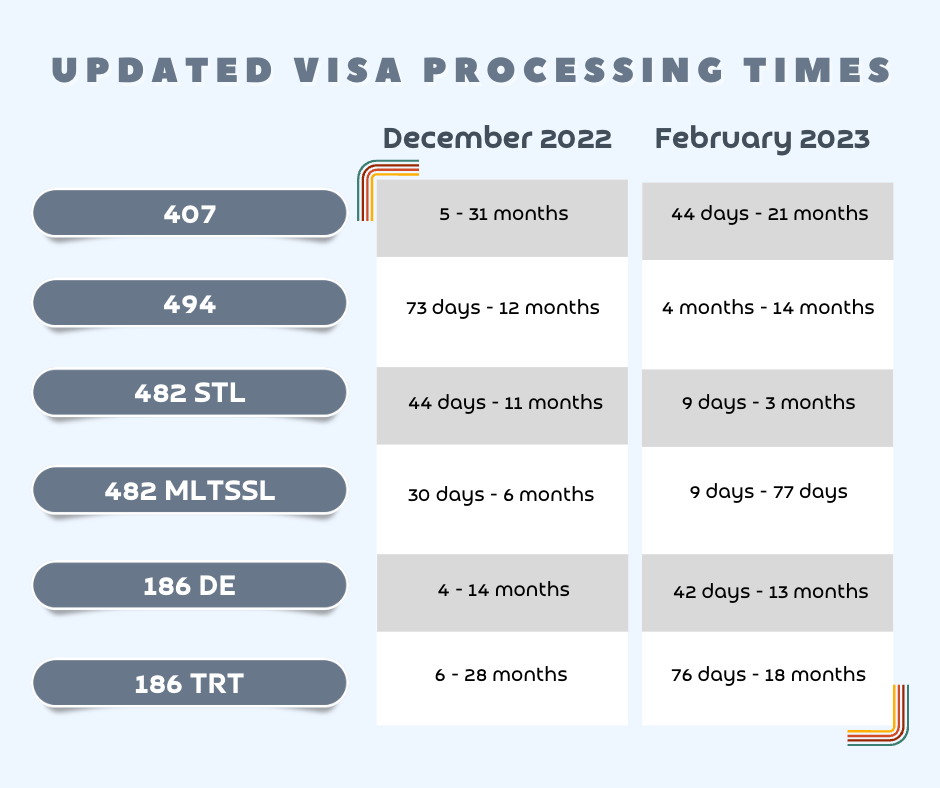
Between November 2022 and February 2023, there has been a massive drop in processing times for visa applications lodged with the Department.
See below updated visa processing times for the Training Visa (Subclass 407), Regional Sponsored Visa (Subclass 494), Temporary Skill Shortage Visa (Subclass 482), Employer Sponsored Visa (Subclass 186 Direct Entry Stream) and (Subclass 186 Temporary Resident Transition Stream).
Visa processing times in Australia can fluctuate for various reasons, including changes in the volume of applications, resource allocation, and the processing requirements for specific visas. When processing times drop, it can present a unique opportunity for visa applicants to have their applications processed more quickly.
Reasons why you might want to take advantage of a drop in visa processing times:
- Faster processing times can lead to quicker decisions: If you have a pending visa application, a drop in processing times can mean that you will receive a decision on your application more quickly. This can be especially important if you have time-sensitive plans or obligations.
- Improved chances of approval: In some cases, a drop in processing times can indicate that the immigration department is processing applications more efficiently and thoroughly, which can lead to improved chances of approval for visa applications.
- Improved processing quality: During periods of reduced processing times, visa processing staff may have more resources available to them, which can result in improved processing quality and reduced chances of errors or delays.
Visa Processing times and MD100
The Visa Processing times is adjusted as per the Ministerial Direction 100 (MD100), which is policy directive that sets processing time standards for certain visa subclasses in Australia. The directive applies to the Department of Home Affairs and requires them to meet specific processing time targets for skilled, family, and partner visa categories. The goal of MD100 is to provide greater certainty and transparency to visa applicants about how long it takes to process their visas, and to ensure that visas are processed in a timely and efficient manner.
Visa applicants should treat the processing time information listed in MD100 as a guide, not a guarantee. The processing times listed in MD100 are targets, and actual processing times may vary based on individual circumstances and the volume of applications received by the Department of Home Affairs. Additionally, the processing time for a visa application can be affected by factors such as the completeness of the application, the quality of supporting documentation, and the complexity of the case.
It is important for visa applicants to understand that while MD100 sets processing time standards, it does not guarantee that a visa will be approved. The Department of Home Affairs retains the discretion to refuse a visa application if the applicant does not meet the relevant criteria, such as health and character requirements.
Factors Affecting Visa Processing Times in Australia
There are several factors that can affect the processing time for a visa application, leading to potential delays or drops in processing times. Some of these factors include:
- Volume of applications: The Department of Home Affairs may receive a high volume of applications, which can result in delays in processing times.
- Complexity of the case: If a visa application is complex or requires additional information or documentation, this can increase the processing time.
- Completeness of the application: A visa application must be complete and include all required information and documentation. If an application is missing information or documents, this can cause a delay in processing times.
- Health and character requirements: If a visa applicant is required to undergo a medical examination or provide police certificates, this can increase the processing time.
- Quality of supporting documentation: The quality and authenticity of supporting documentation can impact the processing time. If the Department of Home Affairs has concerns about the authenticity of the documentation provided, it may take additional time to verify it.
- Background checks: If a visa applicant has a complex immigration history or requires additional background checks, this can increase the processing time.
- Processing priorities: The Department of Home Affairs may prioritize certain types of visa applications over others, based on the government’s policies and priorities.
It essential for visa applicants to be aware of these factors and understand that while MD100 sets processing time standards, it does not guarantee that a visa will be approved in a specific time frame. The processing time for a visa application can be affected by a variety of factors, and visa applicants should be prepared for potential delays or drops in processing times.
It’s important to keep in mind that processing times are subject to change and are not guaranteed. However, if you have a pending visa application and are interested in taking advantage of reduced processing times, it’s a good idea to speak with an immigration professional or your visa sponsor to discuss your options. Book for a free consult with Worldly Migration and have a chat with our principal registered migration agent Evan Bishop MARN 1679414 to know more about visa options and processing times.
Written February 2023.

No Comments